The one question that would have saved me most of my $30,000. It took me several years to figure this one out, but once I did, my crypto fortunes changed forever. (p.34)

★★★★★
“Tony has an exceptional ability to cut through noise and hype. He provides considered, practical guidance.”
Most crypto losses are completely avoidable… and this book helps you avoid them.
The Grown-Up's Guide to Crypto helps inexperienced crypto investors safely navigate the crypto minefield, avoiding the expensive traps, dead ends and mistakes that catch everyone else. Written by someone who didn't have it when he started out, and paid more than $30,000 for the same lessons.
Why smart people lose money in crypto. (Hint: it isn't the coins.)
Having spent several years armpit-deep in the crypto "trenches", and having done more than 1,500 one-on-one coaching sessions with people at all levels, I've seen just about every way there is for people to lose money in crypto.
Let me put one myth to bed immediately: it's almost never about the choice of coin. The first coin someone buys is rarely what brings them undone.
No, it's almost always because they lack a plan, and they lack infrastructure.
The pattern is remarkably consistent.
Someone capable, someone who has built a business or run a team or raised kids without needing a manual for any of it, decides it's finally time to do something about crypto.
So they do what capable people do, and start with an obvious question: what should I buy?
A nephew mentions a coin. A confident-sounding YouTuber has a chart. Someone at the golf club made a few bucks on something last year.
Coinbase gets opened, a number gets typed in, and now there's a position.
And that's where the plan often ends.
There's nothing about where the coins actually live, or what happens if the exchange freezes the account.
Nothing about why they bought it, how much of the portfolio it is, or what they'll do when it drops 70% (which crypto does routinely by the way, and seemingly always at the worst possible moment).
"That was pretty easy," they think to themselves. Their confidence increases a little too much, and they start branching into areas they're even less prepared for, seduced by promises of big returns.
Smaller cap coins. Memecoins. NFTs. Yield farming. DeFi. Leverage.
Then one of the things that always happens, happens.
The small cap coin someone recommended turns out to be a scam.
The promised "yield" turns out to be the next buyer's money.
Or the price simply halves, the panic arrives, and the position gets sold at the exact bottom.
The kind of mistakes none of us think we'll make... until we're making them.
And the lesson they usually take away is "I picked wrong". So next time they'll research harder. Or follow a smarter YouTuber. Or, more often, never go near any sort of crypto again.
But that's the wrong lesson.
I read the Bitcoin whitepaper in 2013, years before most people had even heard the word.
I still lost more than $30,000 in 2021 and 2022 to a DeFi protocol that turned out to be a ponzi, a "move-to-earn" scheme that also turned out to be a ponzi, a memecoin launch I was sure I was early on (but wasn't, of course) and a grab-bag of yield farms I'm too embarrassed to name.
If losing money in crypto were about not knowing enough about crypto, how does that happen to someone with an eight-year head start?
It happens because knowing about crypto and having a system for owning it are two different things. Almost everyone worries about the first and skips the second.
The losses come from the order you do things in.
Buy first, then work out what the plan was.
Buy first, then think about security.
Buy first, then find out what the yield was made of.
Reverse the order and most of the horror stories stop. Not because you picked better. Because there was a written plan and security infrastructure in place before any real money moved.
A written plan that gives you clarity when you most need it: when the market is in chaos and it feels like there is no time to think.
Security infrastructure that insulates you from the worst kind of unnecessary losses: the ones caused by silly mistakes and bad actors.
Don't get me wrong: you can still lose money in crypto with a perfect system. It's a volatile asset class and nobody can promise you otherwise. What you stop doing is losing it to the completely avoidable things a plan would have caught.
That's what this book does. Catches them.
What is The Grown-Up's Guide to Crypto?
It's a tightly-written, no-fluff primer for people who are new to crypto and want the grown-up version: what it actually is, why it matters, and how to own some without becoming a cautionary tale.
No jargon. No hype. No "alpha". No picks.
The Grown-Up's Guide to Crypto teaches the process, and you make your own decisions.
In Australia that's the legal line, and it also happens to be the point: an investor who can only follow someone else's picks is at the mercy of whoever's giving them.
An investor who has the process can evaluate any opportunity, refuse any sales pitch, and survive any guru going dark.
The whole thing is built around a framework I call the Digital Wealth Stack.
Four pieces, in this order:
- Your Approach (the decisions, made in calm time and written down)
- Your On-Ramps (how money gets in and out)
- Your Custody (where the coins live, and it isn't on the exchange)
- Your Operating Rhythm (the boring habits that keep the whole thing from turning into a spreadsheet of doom)
Get those four in place and choosing the coins becomes the smallest decision you'll make.
By the end of this book you'll have:
- The return your money has to clear every year just to stay even with monetary debasement, and why "doing nothing" with cash is its own bet. (Chapter 3)
- The Source-of-Yield Test: one question that lets you ignore about 95% of crypto noise without thinking about it again. (Chapter 6)
- The 90-second self-custody check, and what to fix today if your setup doesn't pass it. (Chapter 8)
- The four-piece Digital Wealth Stack, so you know what you're building before you start building. (Chapter 9)
- Six portfolio principles for setting your own allocation, including the number that matters even more than "optimal". (Chapter 10)
- A checklist to run before any position, and the five mistakes it stops you making. (Chapter 11)
By the time you close the book, your plan is written, your security setup is on the list for the weekend, and you know exactly what you'll do the next time the market falls out of bed.
Once you've read it, you can't go back. You see the crypto market through an entirely different lens.
Your portfolio stops being a random collection of guesses. Every coin in it is there for a reason you wrote down, in one sentence, before you bought it.
Moving a few thousand dollars between an exchange and a wallet stops being the thing you put off for a week. You have a process that gets it done now, with the one mistake that can't be undone taken off the table, and you get on with your day.
The next "opportunity" that lands in your inbox gets one question, and when it can't answer it in a sentence, you close the tab without a second thought.
And when someone at the table over Christmas dinner says "Layer 1", you find you can not only join the conversation with confidence, nobody at the table can keep up with you.
All that for just nine dollars.
So why is it so inexpensive? Because I'd rather it got read than made a margin. I'm sick and tired of seeing decent people lose money in completely avoidable ways. The more people read this book, the less money will be unnecessarily lost.
01
Contents
12 chapters. Nothing you don't need.
Exactly what you need to know about crypto, in the order you need to know it.
-
Part 1 — The Opportunity
- Why I Wrote This Book CH 01
- The Biggest Investment Opportunity of Our Lifetime CH 02
- The Debasement Trap CH 03
-
Part 2 — So What Is Crypto?
- The Foundation CH 04
- Why Bitcoin Matters CH 05
- Beyond Bitcoin CH 06
Here are just some of the things you'll find inside The Grown-Up's Guide to Crypto...
The five mistakes I see smart, capable people making when they first get serious about crypto. Not one of them is "picked the wrong coin". (p.61)
The somewhat surprising question you must ask before you put a cent into crypto, if you want the people who matter to you to be able to get it out without you one day. I've asked a lot of clients what they thought this question is, and nobody has guessed right yet. (p.62)
What your money has to earn every year just to stand still. Once you understand this, "doing nothing" with your cash stops looking safe and starts looking like what it is: waste. (p.17)
The two habits that turn "as long as you keep the recovery phrase safe" into a real guarantee. About $80 and an afternoon, which is almost certainly the best value insurance you will ever buy. (p.43)
★★★★★
"The best part was the way he walked and talked me through the whole process and lifted the anxiety away."
— Todd M.
The two paragraphs that settle the "crypto is bad for the environment" objection at your next barbecue, including the number that fell by 99% in 2022 while the argument carried on as if nothing had happened. (p.41)
The sizing test that not only helps you allocate your capital intelligently, but also helps you maintain it no matter what happens in the market... because more people lose money by losing their nerve, than by getting it wrong to start with. (p.54)
The simple habit that makes "I sent it to the wrong address" a mistake you cannot make with real money. Which matters when nothing in crypto can be undone. (p.44)
Why "how much crypto should I own?" is the wrong first question, and the one you should answer before it. Get them in the wrong order and every number you pick afterwards is a guess. (p.53)
Why the most conservative names in asset management went from dismissing Bitcoin as "an index of money laundering" to running the fastest-growing funds in the history of the US market... and the one thing their product can never give you, however much of it you buy. (p.21)
My ~$30,000 tuition bill, itemised, so you can learn from my mistakes and avoid them yourself. And laugh at how stupid I was. (p.59)
The most-quoted Bitcoin fact, and what it actually means for the money sitting in your bank account. (p.28)
The plain-English definition of "blockchain". One page, no buzzwords, and you will wonder why every other explanation seemed specifically designed to confuse you. (p.26)
02
Who It's For
Who this book is really for.
I'm a child of the '80s.
I grew up taping songs off the radio, using a phone with a cord and waiting a week to find out if the photos came out.
Since then I've built a career.
I've raised kids (or at least kept them alive until now).
I've spent years watching most of my salary disappear every month into a seemingly bottomless bucket labeled "mortgage repayments".
I've lived through the dotcom bubble, the 2008 financial crisis and the brief window when everyone thought Beanie Babies were a retirement strategy.
So when a 22yo with laser eyes tells me to "have fun staying poor", my bullshit detector goes into overdrive.
But something real is happening in crypto. It feels a whole lot like the internet revolution again, just wearing different clothes. I know it. You know it too... or you wouldn't have read this far down the page.
So the question is:
Are you going to do something about it?
Or are you going to do what most people our age do? Turn up to Christmas dinner, listen to the niece explain Layer 1s, and nod politely without the first clue what she's on about... again.
Open up Coinbase like most first-timers, look at the interface for a few moments, shake your head, and close the tab... again.
Because that's the real cost.
Inaction. Sitting on the sidelines while others grab the opportunity with both hands.
Not nine dollars for a book.
And that cost will continue to compound as crypto continues to move from niche to systemic in real time. As Bitcoin ETFs continue to scale past $50 billion. As sovereign wealth funds, corporate treasuries and institutions continue to accumulate.
The people who understood crypto in 2017 were the ones who started paying attention in 2013. The ones who'll understand it in 2030 are getting started right now.
In the end, it all boils down to this.
If you buy the book, read it and decide it wasn't for you... that's two hours and nine dollars you could have spent otherwise. A poor movie choice will cost you a lot more than that.
But if you don't buy it, you could still be putting it off for who knows how long, while it becomes part of everyone else's financial life. But not yours.
Nine dollars. Less than what you'll spend on your next coffee catch-up with your brother-in-law... where you know he'll ask you yet again what you think about Bitcoin.
Get the book — $9
Nine dollars. Two hours. Nothing else to lose.
03
Author
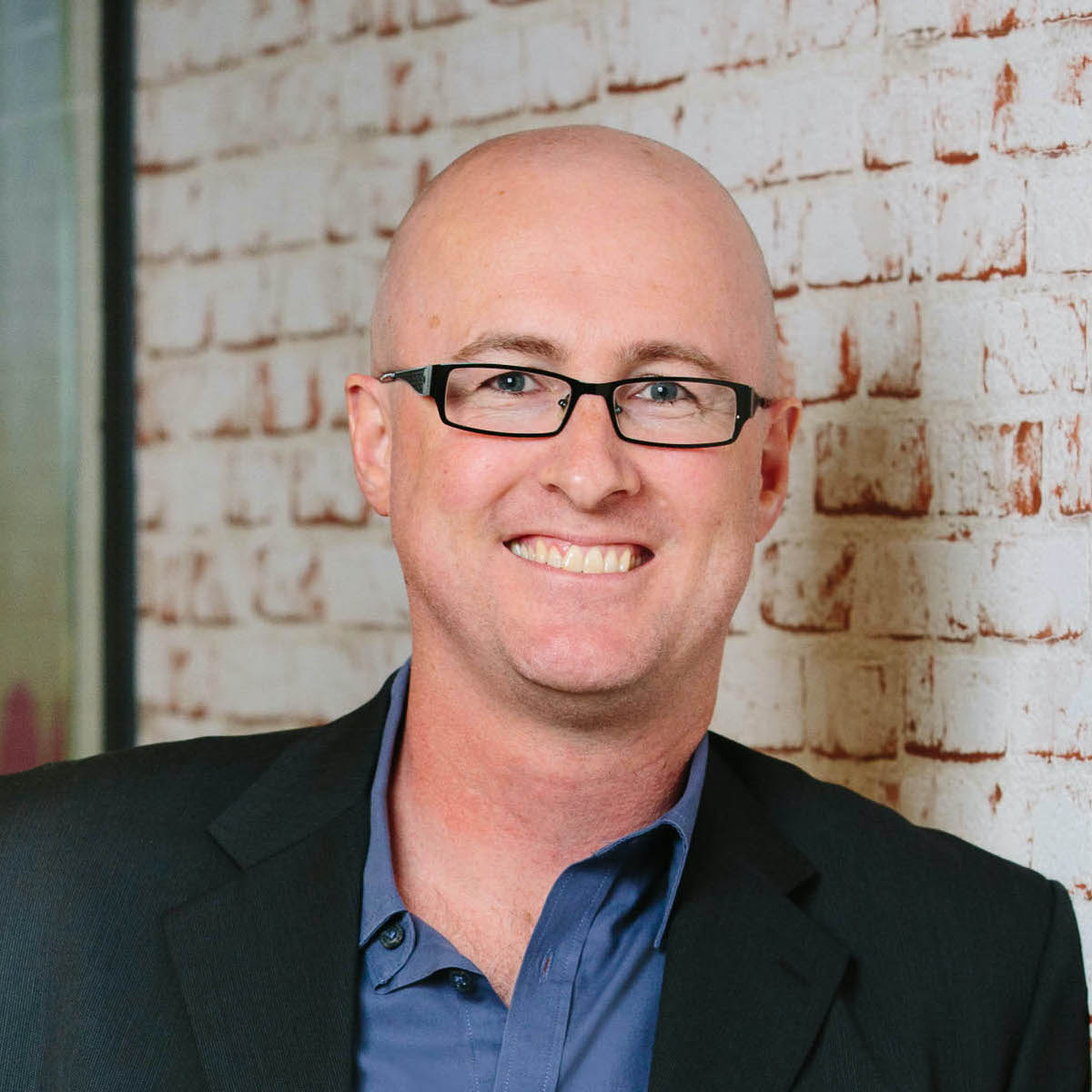
Tony Barrett: started from zero at age 47.
My crypto journey goes back to 2013, when I read the Bitcoin whitepaper on a flight from Melbourne to Sydney. I decided right then and there to pick up a few of these "digital bitcoin thingies". Just in case.
But by the time the flight landed there was some urgent "crisis" to deal with in my business (I can't even remember what it was, so I guess it wasn't that important) and the Bitcoin experiment was relegated to a dusty shelf somewhere in the back of my mind.
It took me 8 years to come back to it.
When I finally sat down to figure it out in 2021, I discovered that Bitcoin had gone from ~$100 to ~$20,000 per coin. D'oh.
Then over the following couple of years I burned more than $30,000 on a grab-bag of shit that I honestly couldn't have explained at gunpoint. Every cent of it avoidable. Every cent of it instructive.
Eventually I got tired of donating my hard-earned money and started building a proper, robust personal framework for crypto investment. A framework for grown-ups. That framework is what's in this book, and every principle, every element, every decision is based on my first-hand experience over the last five years.
Get the book — $9
The framework that cost me 2 years and over $30K. For you it's just 2 hours and $9.
04
FAQ
The questions people ask before they buy.
Who is this book for?
Successful professionals aged 40+ who want to understand crypto without the hype. If you feel overwhelmed by the noise, you're not alone. This book gives you a clear starting point.
Is this financial advice?
No. The book teaches systems, processes, and infrastructure. Not picks or advice. I am not a licensed financial adviser and I don't recommend specific investments. The framework gives you the tools; your decisions stay yours.
What format and how long?
Instant digital delivery. A PDF you can read on any phone, tablet, or computer. About two hours to read in one or two sittings.
I already own some crypto. Is this too basic for me?
If you can say in one sentence why each coin you hold is there, your recovery phrase is on metal in two places, and you know what you'll do when the market drops 70%, then yes, probably. If any of those made you wince, then no. The book is about the process of owning crypto properly, and most people who already own some skipped it.
I'm not technical. Will I be able to follow it?
Yes. It was written for people who are good at their own thing and don't intend to become computer people to do this one. The most technical thing in it is setting up a hardware wallet, and the book walks you through that in plain English.
How is this different from what I can watch on YouTube for free?
Idea content tells you crypto is exciting and the price is going up, both of which are true and neither of which is useful. It sells the dream, but leaves the operations for you to figure out by yourself on a Sunday afternoon. This is a model refined over five years, a full bull-and-bear cycle and 1,500-plus one-on-one sessions, with every piece of it used with real money. And nobody in it is trying to sell you a coin.
What if it's not for me?
Then you spent nine dollars and a couple of hours to find that out, which is valuable in and of itself.
05
Get your copy
For The Adults In The Room.
Instant delivery. Start reading in 2 minutes.
Everything you get for $9
The Grown-Up's Guide to Crypto
How crypto works and what to build before any money moves. PDF.
The Hardware Wallet Buying Guide
Which one, where from, and five rules against tampered or second-hand devices.
The Seed Phrase Storage Protocol
Four rules, two places: the words that control everything survive fire, flood and theft.
The Pre-Flight Checklist
Sixty seconds before every transaction. Catches a wrong address or network before the money leaves.
They are one page each on purpose, kept beside you for the moment it matters, not for the reading pile.
2-hour read · 12 chapters · In your inbox in 2 minutes
Just $9 today
Get instant access
Secure 128-bit SSL checkout
100% Money-Back Guarantee
Read it. If the book doesn't give you a clearer understanding of how crypto works and what to do next, email us within 30 days for a full refund. No questions asked.
Final Word
Crypto isn't coming... it's already here. Are you ready for it?
Crypto's evolution from a niche curiosity to a fundamental sector of the global financial system means more and more of us will end up owning crypto over the next few years, one way or another. Through a super fund, an ETF, or a payment app, often without ever deciding to.
The only question left is whether you'll own it with a clear, effective framework... or the way you watched a colleague buy his first investment property in 2002: expensively and without quite knowing why.
Get the book — $9
Before your broker asks.